


A ring is the least forgiving product a jewelry brand sells. A pendant hides a loose tolerance behind a chain; a ring wears its tolerances on the hand, next to the one the customer bought last year. The difference between a ring program that scales and one that stalls is rarely the quote. It is the specification: who wrote it down, whether the sample matched it, and whether the reorder matched the sample.
This guide covers the practical layer of ordering wholesale moissanite rings: the three setting programs most brands start with, how ring sizing behaves across repeat orders, what to look at on a sample beyond the photo angle, and the spec sheet that keeps order five consistent with order one.
Start From the Setting, Not the Stone
The most common first mistake is picking stones before pickings mountings. A center stone that looks perfect on a parcel tray can be the wrong diameter for the head you planned to use, and adjusting the stone spec is a smaller change than redesigning a ring. Work the other direction: start from the mounting you intend to repeat, read off the seat dimension it needs, and buy the stone to fit it.
That habit also makes your line easier to price. When the mounting stays constant and only the stone moves, a customer asking for “the same ring, a step bigger” is a one-line change instead of a redesign. Our ring programs page is organized around this logic, and the loose stone catalog follows it.
The Three Ring Programs We Produce
Nearly every ring order that reaches us falls into one of three programs. Each has its own failure mode, and the checks that matter on the sample differ accordingly.
| Program | What it involves | Where it usually goes wrong |
|---|---|---|
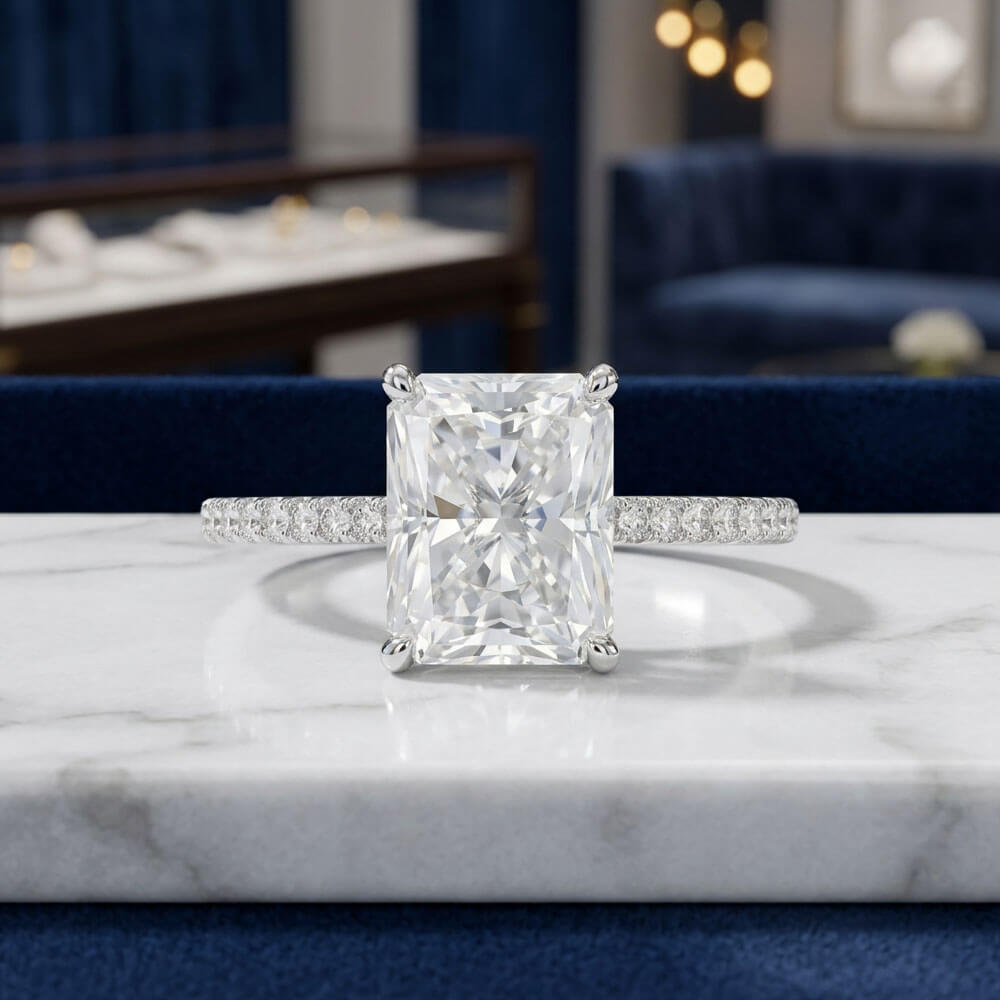
| Solitaire engagement settings | A single center stone on a four-prong, six-prong, or bezel mounting | Calibration. The stone has to arrive at the seat’s millimeter, not near it |
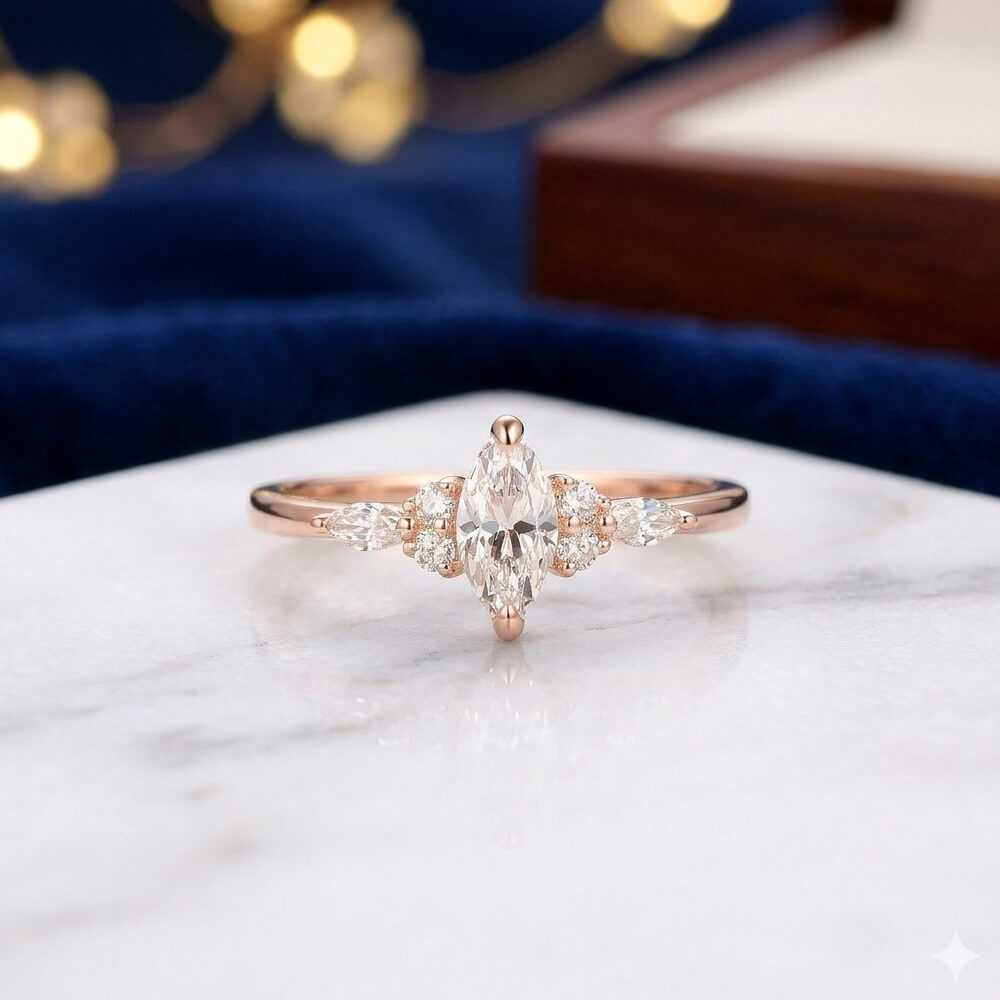
| Center stone with accents | Shoulder stones, pavé bands, halo builds around a center stone | Accent matching. Every accent has to be cut to the seat drawn in the CAD, not to a nominal size |
| Eternity and wedding bands | Stones set fully or partially around the band | Band math. The most calibration-sensitive ring we make, because one out-of-spec size breaks the circle |
All three start from castings. Our silver engagement settings are produced as castings you can brand and scale, and the silver ring catalog shows the current casting styles. The same heads can be cast in 10K, 14K, or 18K gold when the line moves upmarket. That matters more than it sounds: a brand that proves a design in silver and later relaunches it in gold keeps the same CAD, the same seat dimensions, and the same stone specs, which is most of the engineering already paid for.
Ring Sizing That Survives a Reorder
Rings are sized to the market’s standard, US, EU, or UK, and the sizing is confirmed per style at the quote stage. Tell us which market the line sells into and the spec sheet carries it from CAD through sample to production.
The reason this gets its own section is what happens when it is skipped. A reorder that arrives half a size off the first run turns your bestseller into a return queue, and the cause is usually mundane: sizing that lived in an email thread instead of a spec. The fix costs nothing. Put the size standard in the order document, ask the supplier to repeat it back on the quote, and check it on the physical sample with your own ring gauge before approving production.
Metal, Plating, and the Upmarket Path
Most first ring lines start in sterling silver with a plated finish, and there is no shame in that. Silver carries a moissanite stone convincingly and lets you test designs before committing to solid gold inventory.
When a design earns its move upmarket, the conversion is straightforward if it was planned for: the same casting heads run in 10K, 14K, or 18K gold, the seat dimensions carry over, and only the metal quote changes. Ask at the first order whether the design is gold-castable. If the answer is that a new mold would be needed, you have learned something about that supplier’s tooling, and it will matter later.
What to Check on a Ring Sample
Photos sell samples; hands decide them. When the sample arrives, work through this list before you approve anything for production:
- Prong tips under magnification. Burrs, polish scratches, or uneven tip shaping show up here first, and they are the parts a customer’s finger will find.
- The stone’s actual seat. Measure the set stone’s visible diameter and confirm it matches the spec. A stone that was chosen from a tray to “fit close enough” announces itself as a rocking stone within weeks.
- The inside of the band and gallery. These surfaces never appear in product photos and always appear in returns. Rough casting texture inside the band is the classic shortcut finish.
- Plating at edges and high points. Plating wears from the outside in, so the edges tell you the true thickness. Thin plating on a pavé band’s outer edge will show base metal by the second month of daily wear.
- Consistency across multiples. If you ordered several of the same design, compare them to each other, not just to the CAD. Repeatability inside one batch is the best available preview of repeatability across batches.
Each item on this list maps to a failure mode that is quick to fix on a sample and expensive to fix on five hundred units. If you are still choosing between suppliers at this stage, the trial order guide walks through how to structure a first order so it tests exactly these points.
From Approved Sample to Repeat Order
The sample’s real job is to become a reference. Once approved, it and the spec sheet behind it define the product: ring size standard, seat dimensions, metal, stone sizes, finish. A reorder should never be a conversation, it should be a document reference plus a quantity.
Two things keep that working. First, the quote stage names the lead time for that specific order in writing, so reorders are planned from dates rather than optimism. Second, mixed orders are accepted: silver and gold versions, several ring sizes, or rings alongside loose accent stones from the loose stone catalog can travel in one shipment, which keeps a restock cycle down to one freight event instead of three.
Frequently Asked Questions
-
Is there a minimum order for wholesale rings?
No. A single sample ring and a production run go through the same process, and mixed orders of different sizes, metals, and designs are accepted.
-
Can I send my own CAD file, or only a reference photo?
Both work. A sketch or reference photo is enough to start; a CAD file speeds up the quote because the seat dimensions are already fixed. Custom designs come back as CAD within 72 hours and as a physical sample about 7 days after drawing approval.
-
What determines the price of a ring order?
Silver or gold weight, stone sizes, and design complexity. Quotes are itemized so you can see which lever moved, and the certificate line, if you want one, is priced as its own fixed line rather than folded into the piece price.
-
Do rings ship with certificates for the stones?
Not by default. A GRA certificate card can be added at a fixed fee shown as its own line on the quote, and it records the specifications the stones were sold under rather than acting as a laboratory grading report. The full policy is on the certification page.
-
Can one design be produced in both silver and gold versions?
Yes, when the casting heads support it. Confirm gold castability at the first quote, and the same seat dimensions and stone specs carry across both versions.
Request a Ring Quote → · See the Ring Programs → · Read the Wholesale Overview →