


Wholesale Moissanite Rings for Brands, Designers, and Retailers
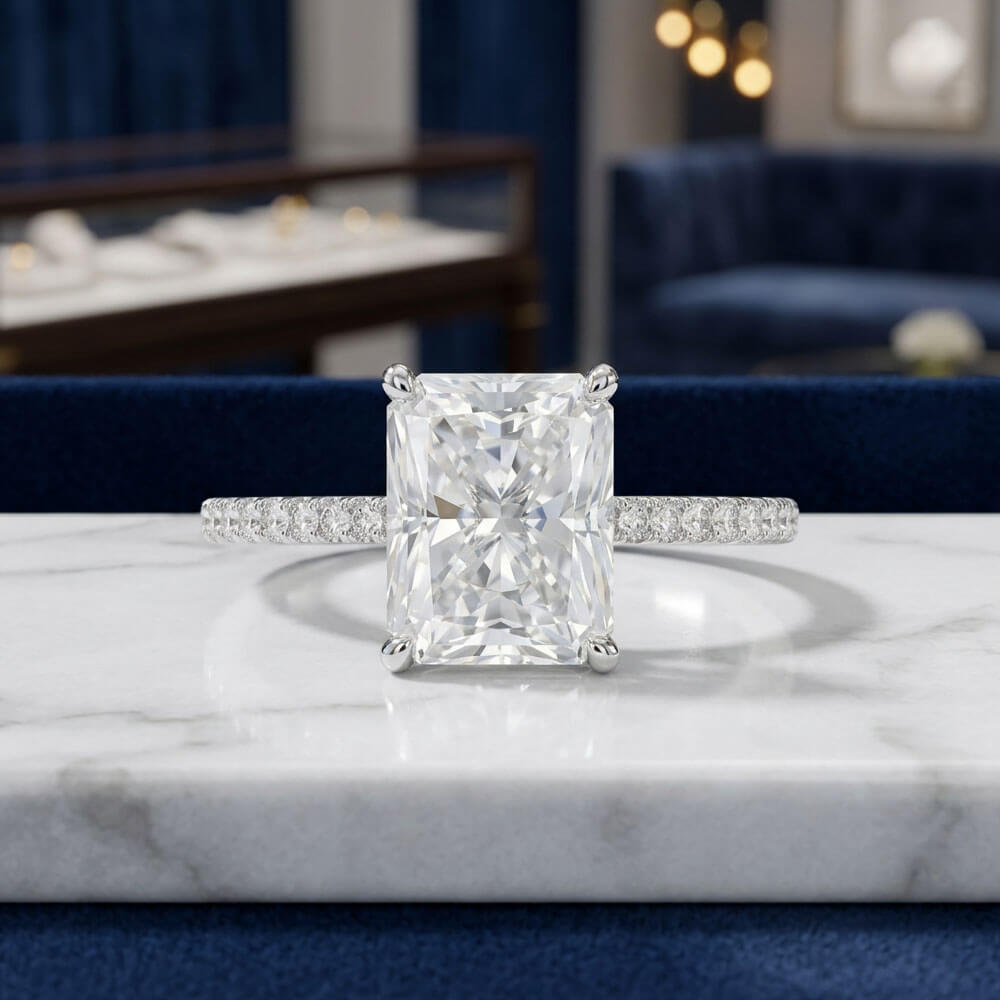
Rings are the category your customers judge hardest. They are also the category most factories make hardest to buy: high minimums per style, a six-week silence while a casting queue moves, and a reorder that arrives half a size off the first run. This page covers how our ring program is built — which styles we produce, how sizing and stone calibration work, what paperwork travels with an order, and how sampling runs — so you can judge the program before you commit a single order.
We produce finished moissanite rings in silver, gold, and platinum, from our existing catalog or from your own CAD. The commercial terms are the ones we apply across every category: no minimum order, standard stone sizes held in stock, mixed orders accepted. The ring-specific detail is below.
Ring Programs We Produce
Four production programs, all on the same bench. The current catalog carries in-stock versions of each; your CAD starts a new version of any of them.
1. Solitaire engagement settings. A single center stone on a four-prong, six-prong, or bezel mounting. This is the style most first collections start with: one stone, one casting, and a price point you can tune by moving the carat weight a step instead of redesigning the ring. Our silver engagement settings are produced as castings you can brand and scale, and the same heads can be cast in 10K, 14K, or 18K gold when the line moves upmarket. See, for example, wholesale silver engagement ring settings and a custom solitaire in 14K.
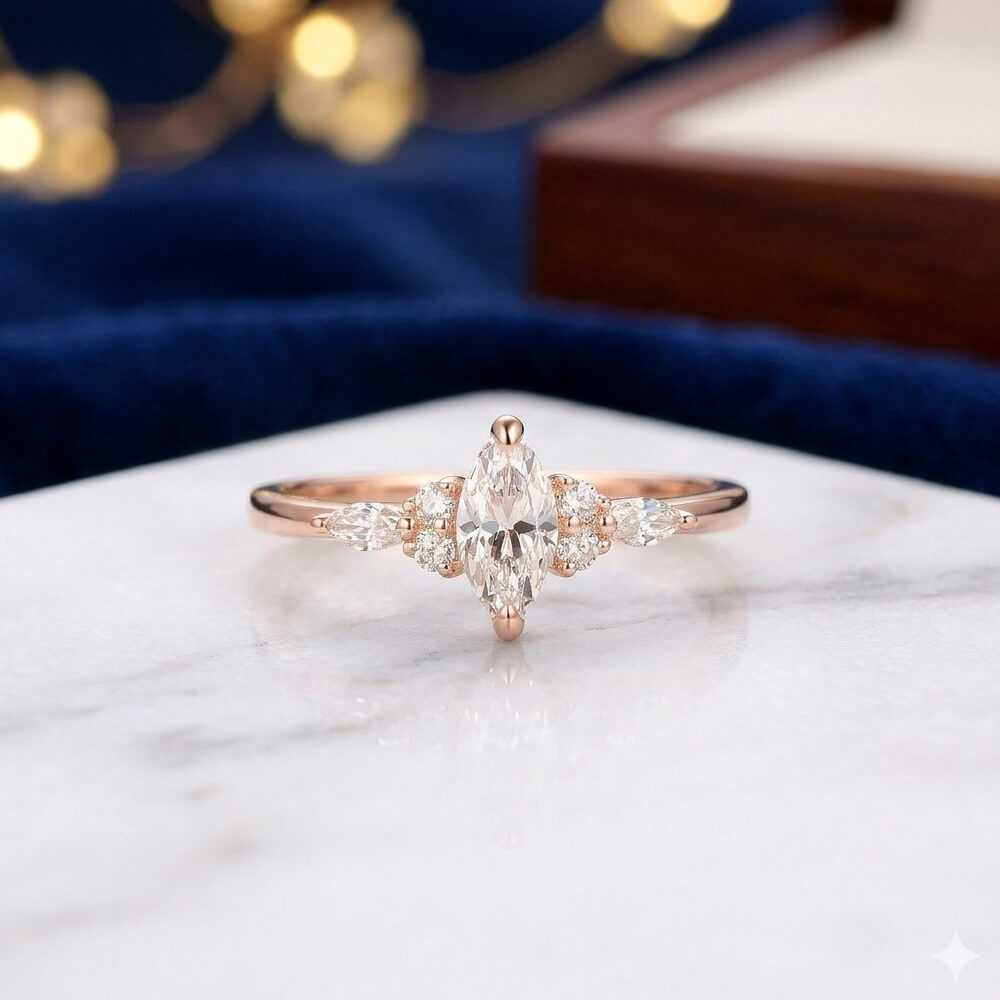
2. Side-stone and halo rings. A center stone framed by accents — shoulder stones, pavé bands, halo builds. These orders live or die on accent calibration: every accent stone has to be cut to the seat that was modeled in the CAD, not to a near-miss size that gets forced in at setting. We cut accents to the drawing and check the seating at QC. Micro-inlay and titanium work are also on our bench, which is where most suppliers stop returning your emails.
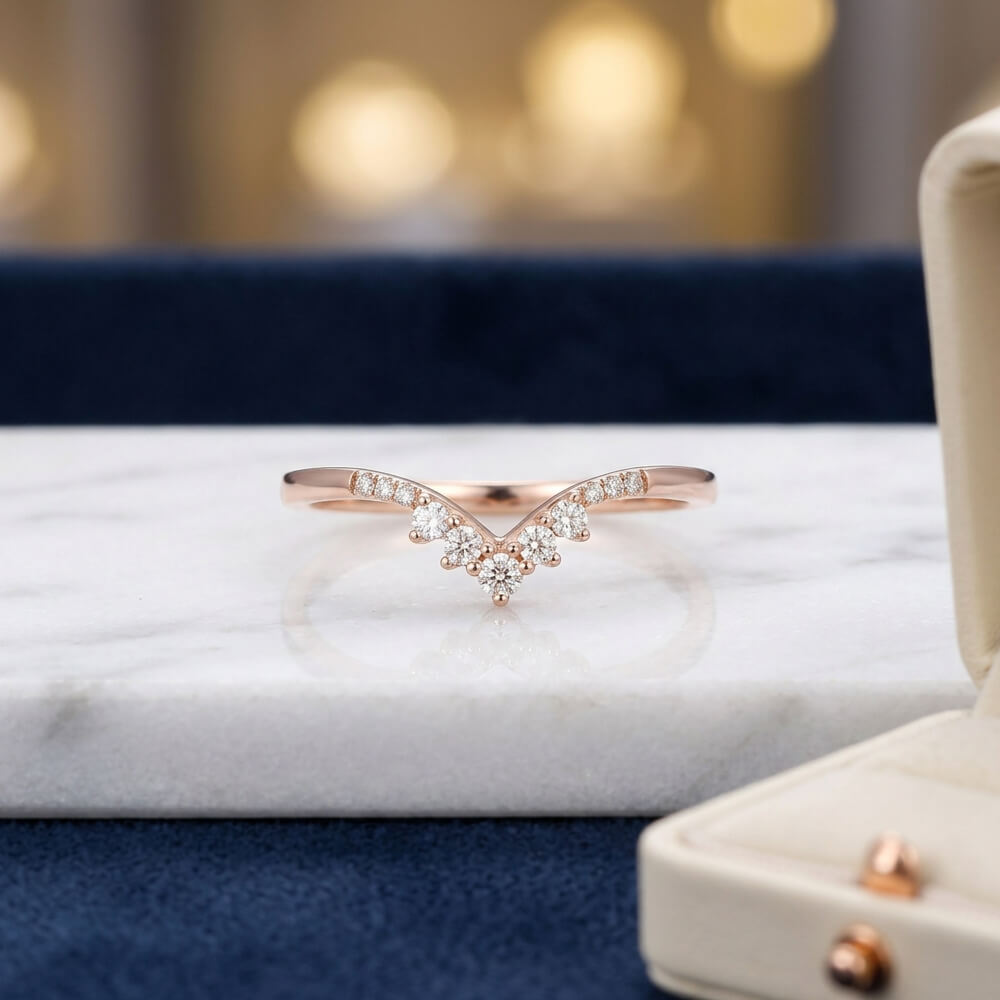
3. Eternity and wedding bands. Stones set fully or partially around the band. This is the most calibration-sensitive ring we make, because a band with stones at a consistent millimeter is a band that can be reordered — and one without it cannot. Bands are built around calibrated stone diameters so the circle closes evenly, whether it is a full eternity or a half-set. A white gold moissanite wedding band from the current catalog shows the style.
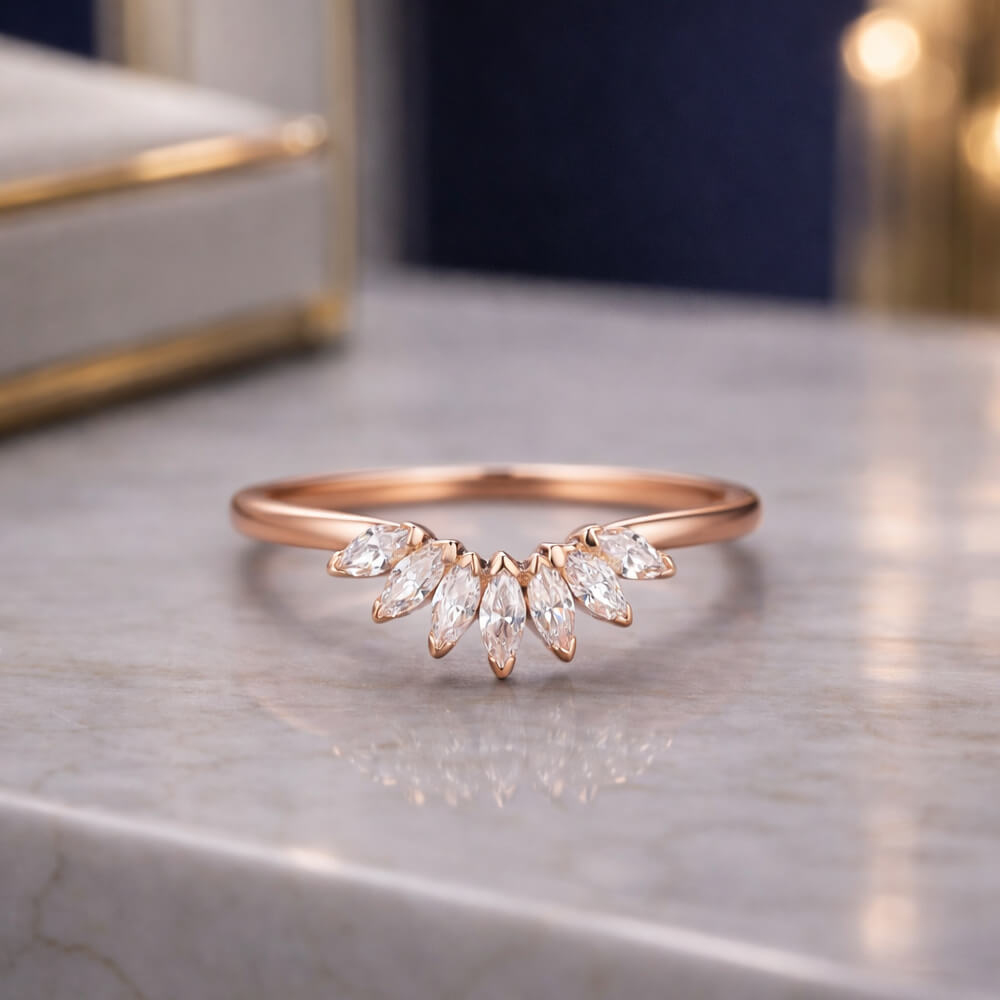
4. Vintage-inspired and everyday designs. Milgrain edges, filigree galleries, stackable bands, and the adjustable silver designs already in our catalog. These carry lower unit prices and suit lines that want breadth — a dozen daily-wear styles that sell continuously while the bridal program builds your margin.
All four programs accept your branding: hallmark, logo stamp, packaging. OEM and private label details are on the main wholesale page.
Sizing, Calibration, and Why Reorders Fit
Three numbers decide whether a ring program can scale. We control all three.
Ring size. We size rings to your market's standard — US, EU, or UK sizing — at the quote stage, per style. Tell us the market and the size spread your customers buy, and we produce to it. Adjustable shanks are available in the silver line where you want one SKU to cover a range.
Center stone diameter. Stones are cut to calibrated millimeter sizes so the stone seats in the casting the first time — and, more importantly, so the reorder seats in the same casting. If ring number forty arrives with a center stone half a step off, your setting bench eats the cost. We cut to the same spec every run and measure against it at QC before anything ships.
Accent stone count and fit. For pavé and halo builds, accent stones are ordered against the CAD's seat count, not against a generic parcel. That is the difference between a setting pass that goes smoothly and one that grinds stones down and hopes.
Standard millimeter sizes in the common stock shapes — round, oval, cushion, pear, marquise, heart, trillion — are held in stock, so a restock of your best-selling solitaire does not wait on a cutting run. Non-standard sizes and fancy cuts are produced to order; we confirm which side of that line your spec is on before you commit.
Certificates: Not in the Box by Default
The same rule applies to rings as to every other category: no certificate ships unless you ask for one. Ask for a GRA certificate card and a fixed fee is added as its own line on your quote — the same fee on every order. What our prices differ by between orders is the spec — center stone size, design, metal weight — not paperwork, and there is no "certified" pile and "seconds" pile behind the catalog.
The full explanation — what a GRA card is, what it is not, and when an IGI report makes sense (for lab-grown diamonds, not moissanite) — is on the certification page. Read it before you brief your own customers; it is written so you can repeat it without getting into a return dispute.
How Sampling and Production Work
The same four steps as every category, with a fixed deliverable at each one.
Step 1 — Brief and quote. Send a design reference, stone specs, metal, ring sizes, and quantity. We come back with a quote and the lead time for that specific order in writing.
Step 2 — CAD. A 3D drawing within 72 hours. This is the stage to fix prong shape, gallery height, shank taper, and accent seat count — changes are cheap here and expensive after casting.
Step 3 — Physical sample. A finished sample ships in about 7 days after CAD approval. Put it on a hand, not just on a desk — sizing and comfort live in the shank.
Step 4 — Production and QC. After sample approval, the run goes into production. Every order gets a dedicated QC pass — stone seating, polish, size against spec — with photos sent to you before the box is sealed.
Frequently Asked Questions
What is the minimum order for wholesale moissanite rings?
There is none. One ring is a valid order — you can proof a single piece to check the setting, the stone, and the sizing before committing to a run. Mixed orders across ring styles, or rings plus loose stones, ship together.
Can I reorder the same ring months later and get the same stone fit?
Yes. Center and accent stones are cut to calibrated sizes and the casting spec is kept on file, so a reorder seats the same as the first run. That is what calibration is for — stone number forty fits like stone number one.
Do the rings come with a certificate?
Not by default. A GRA certificate card can be added at a fixed fee shown as its own line on your quote. It records the stone's specifications; it is not a laboratory grading report, and we say so plainly. Full details are on the certification page.
Can I order ring settings without stones?
Yes. We supply finished settings for buyers who source loose stones separately — silver engagement ring settings are an example. If you buy stones and settings from us together, the stones arrive matched to the seats, which removes the calibration risk entirely.
Silver or gold — which should a first ring line use?
Follow your retail price point. Silver lets you test designs at the lowest unit cost; 14K gold is where most US bridal lines sit. A common path is to proof in silver, then cast the winners in 14K — the CAD carries over unchanged. Both catalogs are browsable: silver moissanite rings and gold jewelry.
How fast can I see a sample ring?
CAD within 72 hours of your brief, and a physical sample about 7 days after you approve the CAD. Rings built around stocked stone sizes move faster than stones cut to order — we flag which side your spec falls on at the quote stage.
Request a Quote → · Browse the Silver Ring Catalog → · See the Full Wholesale Program →